This One Kind of Vehicle Costs the Least Over Time
 Written by
David Nadelle
Written by
David Nadelle
 Edited by
Zuri Anderson
Edited by
Zuri Anderson

Commitment to Our Readers
GOBankingRates' editorial team is committed to bringing you unbiased reviews and information. We use data-driven methodologies to evaluate financial products and services - our reviews and ratings are not influenced by advertisers. You can read more about our editorial guidelines and our products and services review methodology.

20 Years
Helping You Live Richer

Reviewed
by Experts

Trusted by
Millions of Readers
The price you pay to purchase a car is not the only expense associated with owning one. An important consideration when buying a vehicle is whether you have the financial means to cover the ongoing costs of insurance, upkeep, repairs and fuel.
And they can be considerable. According to Synchrony’s latest Cost of Car Ownership report, drivers are shelling out around 167% more than anticipated each year to maintain their present automobiles.
Over time, certain types of vehicles fare better on the wallet than others. Unfortunately, paying more up-front doesn’t guarantee any financial relief down the road.
You Keep on Paying for Luxury
Audi, BMW, Land Rover, Mercedes-Benz, Porsche and Volvo bottomed Consumer Reports‘ (CR) 2025 Annual Auto Surveys when it came to maintenance and repair costs.
“Luxury vehicles are often quite expensive to maintain over time,” said CR’s Steven Elek.
Choosing a cheaper, reliable vehicle can reduce upkeep costs throughout its life and lower overall ownership costs. But what type of vehicle will cost its owner the least over time? Is it a gas-fueled sedan? A hybrid or electric vehicle? An SUV with great mileage?
Here’s what the research said.
Compact Hatches, Crossovers and Sedans — Still the Best
It’s unfortunate that auto manufacturers have phased out smaller vehicles. Not only are compacts the most affordable cars to buy, but they have higher fuel efficiency, cheaper maintenance and frequently have lower insurance premiums and greater long-term durability than larger SUVs and trucks. They often have the best resale value, too.
“From decades of dealership and used-car management experience, the strongest indicator of true longevity is what franchise dealers are confident keeping on their lots with more than 100,000 miles,” said Randy Barone, vice president of the online dealer-to-dealer car auction platform ACV Auctions. “When you look at that data, a clear pattern emerges. Brands that consistently perform at the top include Toyota, Lexus, Honda, Acura.”
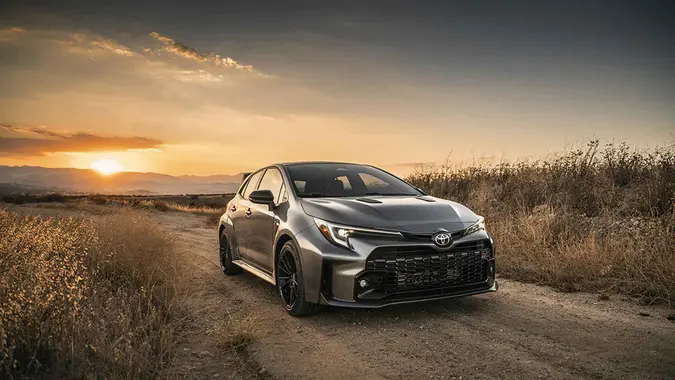
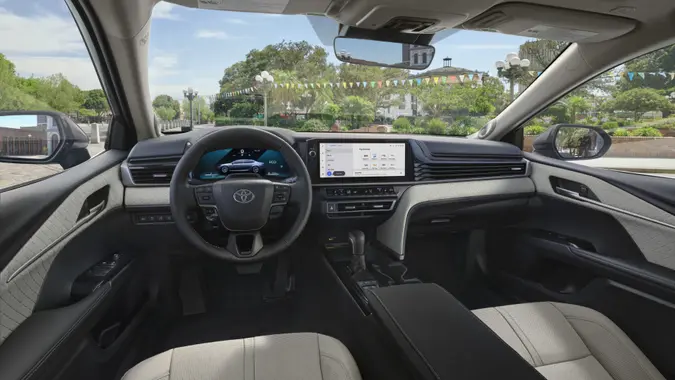
According to CarEdge’s five-year cost of ownership projections, the top 10 vehicles with the lowest cost of ownership for 2026 include three Toyotas (Corolla Hatchback, Camry and Corolla), two Hondas (Civic and HR-V) and two Nissans (Sentra and Versa). Hyundai’s Venue, Subaru’s Impreza and Kia’s K4 also rank high.
Should You Consider a Hybrid?
According to CR’s reliability rankings, “The latest survey results show that all-electric (EV) and plug-in hybrid electric (PHEV) vehicles continue to be troublesome for their owners. However, [conventional] hybrid models, which don’t require plugging in, continue to shine as reliable choices that also typically deliver excellent fuel economy.”
“For consumers who may not be ready for a fully electric vehicle — whether due to range concerns, commuting needs, or charging availability — hybrid vehicles remain an excellent option,” Barone said. “Many hybrids offer outstanding fuel economy, strong reliability and relatively stable depreciation compared with other vehicle segments.”
It’s more important than ever to do your research when buying a car. Being able to afford the purchase is one thing, but paying for future costs is another entirely. If you’re concerned about what will cost you the least over time, look for smaller vehicles with solid reliability ratings that will depreciate slowly.
More From GOBankingRates