The One Big Box Store Hack That Could Save Retirees Hundreds Every Month in 2026
 Written by
Jamela Adam
Written by
Jamela Adam
 Edited by
Amen Oyiboke
Edited by
Amen Oyiboke
Commitment to Our Readers
GOBankingRates' editorial team is committed to bringing you unbiased reviews and information. We use data-driven methodologies to evaluate financial products and services - our reviews and ratings are not influenced by advertisers. You can read more about our editorial guidelines and our products and services review methodology.

20 Years
Helping You Live Richer

Reviewed
by Experts

Trusted by
Millions of Readers
If you’re retired (or close to it), you’ve probably already done the obvious stuff to save money at big box stores, like shopping sales and using coupons.
But here’s the thing most retirees don’t realize: you don’t need to cut back on things you enjoy or stick to complicated budgeting methods to save hundreds each month.
To see where the savings really are, you have to look beyond the big number on the shelf. Here is the one big box store hack that will save you money.
Why the Shelf Price Can Be Misleading
Big box stores and grocery stores are very good at making prices feel reasonable. When you see a big package, a bold price tag, and the word “value,” it’s easy to assume you’re automatically saving money. But the total price of the product you’re buying doesn’t necessarily tell you what you’re really paying.
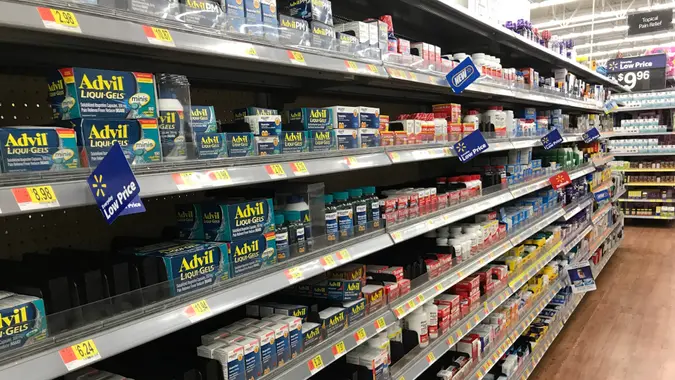
Two boxes of cereal, bags of rice, or bottles of detergent might sit side by side with prices only a few dollars apart, but the unit price can look very different. That’s why you should always pay attention to the price-per-unit labels on the shelf so you can compare products fairly. These break the cost down by ounce, pound, roll, or count.
Read More: 11 Best New Items Coming to Dollar Tree in 2026
Find Out: 5 Clever Ways Retirees Are Earning Up To $1K per Month From Home
Where This Makes the Biggest Difference
Doing this can make a pretty big difference in how much your grocery bills cost, especially if you’re buying certain items repeatedly.
For example, let’s say you’re buying paper towels at Costco. One pack might be $19.99 and another $22.99. If you don’t take into account the price-per-unit, you might just grab the cheaper one and move on. But when you look at the unit price, the more expensive pack may actually cost less per sheet.Over the course of a few months, that difference can add up to significant savings.
And if you’re shopping for one or two people, price-per-unit shopping helps you find the best value without overbuying or wasting food. So, the next time you visit a big box store like Walmart or Costco, don’t forget to consider the unit price when comparing your options.
What the Savings Can Look Like Over Time
Let’s say you save just 50 cents to a dollar by choosing the better unit price on everyday items. That doesn’t seem like a lot. But when you apply that same decision across all the everyday items you buy, the savings add up faster than you might expect.
For example, if you make 50 to 70 purchases a month and save 50 cents each after comparing the unit price, you’re saving $25 to $35. And if you add in larger purchases like pet supplies or laundry detergent, where unit price differences are larger, you could easily save $75 to $100 a month without having to change your shopping habits or cut back.
So, if you’re used to looking at the bold price and ignoring the price-per-unit on the shelf tag, it’s worth slowing down for a second and comparing the unit prices before you put anything in your cart.
More From GOBankingRates