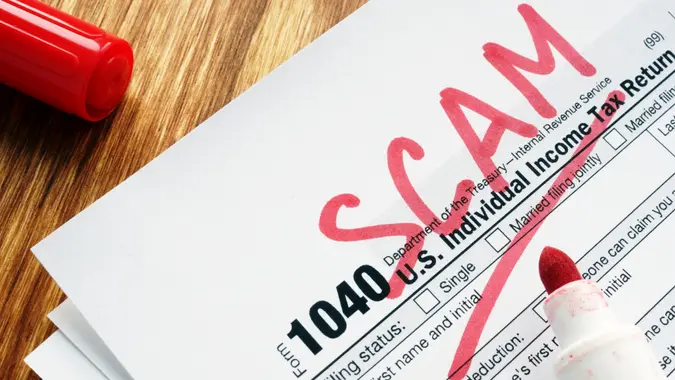
4 Tax Mistakes Seniors Make That Could Trigger an IRS Audit
 Written by
Choncé Maddox
Written by
Choncé Maddox
 Edited by
Rebekah Evans
Edited by
Rebekah Evans
Commitment to Our Readers
GOBankingRates' editorial team is committed to bringing you unbiased reviews and information. We use data-driven methodologies to evaluate financial products and services - our reviews and ratings are not influenced by advertisers. You can read more about our editorial guidelines and our products and services review methodology.

20 Years
Helping You Live Richer

Reviewed
by Experts

Trusted by
Millions of Readers
No one likes to get audited by the IRS. While there are many myths and assumptions about what can lead up to an IRS audit, most people will not experience one. According to the IRS, it conducts audits randomly for the most part, but returns that have noticeable issues or inconsistencies could be flagged for an audit.
For older adults and seniors who are managing retirement withdrawals, investment income and Social Security benefits, some filing mistakes can raise red flags that may not be realized upfront. Here are four tax mistakes seniors should avoid making in the hopes of not getting flagged for an IRS audit.
Not Reporting All Retirement Income
Many retirees tend to have multiple streams of income including Social Security, pensions, IRA withdrawals, investment returns and even part-time work. As a result, you may receive multiple tax forms like a 1099-R, 1099-SSA or 1099-DIV.
The IRS uses document matching systems to make sure the income you report matches the tax forms you received. It’s best to take your time when filing and be thorough when it comes to including all your income for that year.
Misreporting Social Security Income
Some seniors may make the mistake of believing that all social security income isn’t taxable, but this isn’t true. While Supplemental Security Income (SSI) payments aren’t taxable (per the IRS), your social security income may be taxable depending on your other sources of income for that year and your filing status. You can talk to a tax professional to determine if you will be taxed on that income, but regardless, you’ll want to report your income in its entirety when you file your taxes.
Claiming Charitable Deductions Without Documentation
Donating to charity can be a great way to support causes you care about and it can also help lower your taxable income. But taxpayers, especially seniors making large donations to charity during the year, should always keep up with the documentation that verifies their donations and submit it when filing taxes.
If you donate more than $250 to a charity, the IRS requires you to have a written receipt or acknowledgment from the organization. Also, when you donate items like collectibles or other property, you may need to have them professionally appraised to ensure the amount you put on your tax return is accurate.
Forgetting Required Minimum Distributions (RMDs)
Once retirees reach the age where they need to make RMDs, they must withdraw minimum amounts annually from their retirement accounts including their 401(k) or IRA. Currently RMDs are required once you turn 73, according to the IRS, but you could delay your first RMD until April 1 of the following year of turning 73.
Failure to take your RMDs at the required time can result in a 25% tax penalty. Some seniors who are nearing this age and haven’t withdrawn from certain retirement accounts yet could be at risk for this tax penalty, especially if you file your own taxes and forget this required rule.
Some practical things you can do to avoid these common tax mistakes include:
- Double-checking all 1099 forms
- Keeping documentation for deductions
- Reviewing retirement withdrawals carefully
- Considering professional tax help for complex returns
As retirement finances can become more complex, it’s worth taking a little extra time to review your tax forms and income sources before filing taxes each year.
More From GOBankingRates