I’m a Mechanic: 5 Money-Pit Luxury Cars To Avoid in 2026
 Written by
G. Brian Davis
Written by
G. Brian Davis
 Edited by
Brendan McGinley
Edited by
Brendan McGinley
Commitment to Our Readers
GOBankingRates' editorial team is committed to bringing you unbiased reviews and information. We use data-driven methodologies to evaluate financial products and services - our reviews and ratings are not influenced by advertisers. You can read more about our editorial guidelines and our products and services review methodology.

20 Years
Helping You Live Richer

Reviewed
by Experts

Trusted by
Millions of Readers
The cost of driving a luxury vehicle doesn’t end with the sticker price. Most fancy cars cost more to maintain and repair and require premium gasoline. Parts are pricier and so is the specialized labor to fix the complex electronic and mechanical systems. Your typical splurge-ride creates more problems than luxury.
Even so, some luxury cars come with far more expensive headaches than others. Watch out for these worst offenders as you scout out your next high-end ride.
Jaguar XJ
Jaguar builds undeniably elegant cars. But that elegance doesn’t extend to dependability.
“The XJ’s electrical components tend to fail and its suspension parts deteriorate faster than average,” said veteran mechanic Alan Gelfand of the German Car Depot. “The suspension system and cooling system also break down more than they should and that says nothing about the difficulty sourcing parts and high labor costs.”
It doesn’t matter how beautiful a car is if no one ever sees it — because it spends so much of the year at the shop.
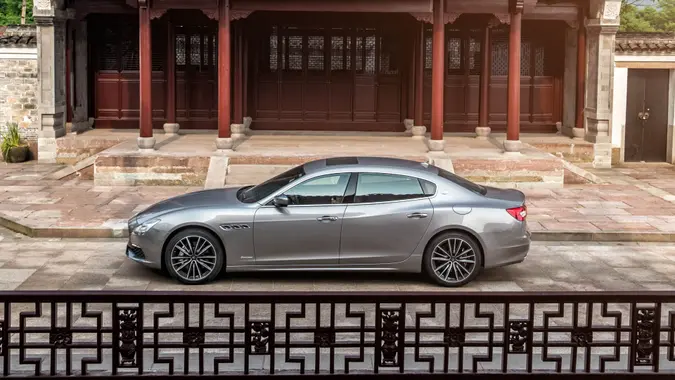
Maserati Quattroporte
All the same logic applies to the Quattroporte, a gorgeous car that struggles to stay healthy.
“The Quattroporte’s engine, transmission and electronic issues get extremely expensive and certified mechanics for these cars are limited compared to other luxury brands,” adds Gelfand.
CarEdge grades the Quattroporte an “F” on value for money, with the cost of ownership averaging $164,456 for the first five years alone.
Steer clear of these beautiful but treacherous sirens.
Audi Q7
The value rating doesn’t get much better for the Audi Q7. CarEdge grades it a “D+,” and calculates the average five-year cost of ownership at $75,538. Gelfand sees plenty of these in his shop, for all the wrong reasons.
“The electrical and transmission problems and complex all-wheel-drive systems, all become erratic when vehicles exceed the 100,000-mile mark,” he said.
In fact, the Q7 earns the dubious distinction of a place on US News and World Report‘s list of the ten least reliable cars of 2026. Buyers looking for a luxury three-row SUV can do better.
BMW X1
Also landing on that list of the most unreliable cars? The subcompact X1 SUV, which also makes far too many appearances in Gelfand’s garage.
“When these cars are new and under warranty, they’re impressive. But their suspension systems fail often and their cooling systems and electronic modules need costly maintenance. Small equipment problems will eventually result in expensive repair costs.”
Land Rover Range Rover
Drivers love Range Rovers for their effortless blend of ruggedness and luxury. Unfortunately, there’s nothing rugged or resilient about the powertrain and electronic systems.
“Range Rovers experience three main types of failures: air suspension breakdowns, electrical malfunctions and cooling system breakdowns,” said Gelfand. “The cost of parts remains high and you often need specialized labor for repairs, often done in batches instead of as individual repair needs.”
The Range Rover too scored CarEdge’s worst grade of “F” for value, with a $141,424 total cost of ownership in the first five years.
Look elsewhere for a luxury SUV that can handle your weekend off-roading.
More From GOBankingRates