How To Void a Check: Simple Step-by-Step Guide
 Written by
Kathy Evans
Written by
Kathy Evans
 Edited by
Elizabeth Constantineau, CFHC™
Edited by
Elizabeth Constantineau, CFHC™

Commitment to Our Readers
GOBankingRates' editorial team is committed to bringing you unbiased reviews and information. We use data-driven methodologies to evaluate financial products and services - our reviews and ratings are not influenced by advertisers. You can read more about our editorial guidelines and our products and services review methodology.

20 Years
Helping You Live Richer

Reviewed
by Experts

Trusted by
Millions of Readers
Voiding a check is one of those basic banking skills that comes up more often than you’d expect — whether you’re setting up direct deposit, authorizing automatic payments, or fixing a mistake. It takes about 10 seconds to do correctly, and doing it wrong can create real headaches. Here’s exactly what you need to know.
Quick Steps To Void a Check
- Write “VOID” in large letters across the front
- Keep your routing and account numbers visible
- Do not sign the check
- Store or dispose of it securely
What Does It Mean To Void a Check?
Voiding a check marks it as invalid so it can’t be cashed or deposited. The check still exists — it just can’t be used as a payment. The account and routing numbers remain visible, which is often the whole point: you’re sharing your banking details in a safe, controlled way.
How To Void a Check in 4 Steps
- Take a check from your checkbook. Use a blank check — one you haven’t filled out or signed.
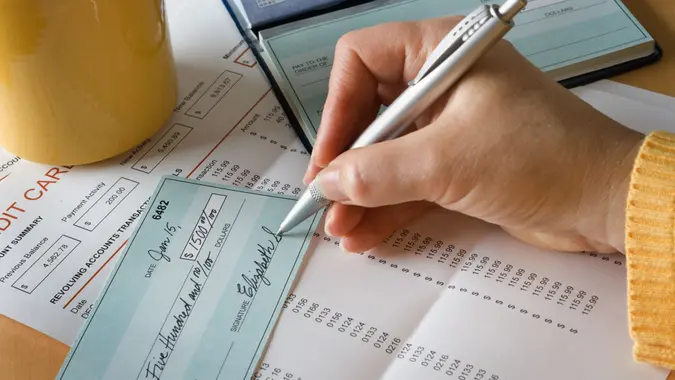
- Write “VOID” in large, clear letters across the front. Use a pen, not a pencil. Make it big enough that no one could miss it. It’s fine if “VOID” covers the date, payee, amount, and signature lines.
- Keep your account information visible. Do not write over your routing number or account number at the bottom of the check. Those numbers are the reason you’re voiding the check in the first place.
- Store or submit it securely. If you’re handing it over to an employer or payment provider, do so through a secure channel. If you’re keeping it, store it somewhere safe and note the check number in your checkbook register.
Good To Know
Before attempting to write a voided check, remember to never hand over a blank check to anyone for any reason.
A blank check invites thieves to fill in any desired amount and withdraw money from your checking account.
Why You Might Need To Void a Check
Here are some common reasons why you may need to void a check:
- Setting up direct deposit. Most employers ask for a voided check when setting up payroll direct deposit. It gives them your account and routing numbers in a format that’s easy to verify and hard to tamper with.
- Authorizing automatic payments. Utility companies, lenders, and subscription services sometimes request a voided check to set up recurring ACH payments from your bank account.
- Fixing a mistake. If you wrote the wrong amount, misspelled the payee’s name, or simply changed your mind, voiding the check cancels it so it can’t be used.
Precautions To Take When Voiding a Check
A voided check is a helpful tool, but only when handled properly. Follow these tips to avoid accidental misuse or security risks.
- Write “VOID” clearly across the entire check. Make sure “VOID” is written over the signature, payee information and dollar amount lines.
- Leave account information legible. Do not write “VOID” over your routing or account numbers as these are necessary for setting up a direct deposit.
- Do not sign the check. Do not sign a voided check as it could appear like you are authorizing a transaction, even if the word “VOID” is written across it.
- Use an ink pen. Do not write in pencil or anything that can be altered or erased.
- Store the voided check in a safe place and record the number. It’s important to make sure you keep your voided check in a safe location. You should also record the check number in your checkbook so you don’t lose track of your expenses.
- Securely destroy the check. If you do not wish to store your voided check, make sure you eliminate it securely, like putting it through a paper shredder.
Why Do You Need a Voided Check for Direct Deposit?
A voided check is often required when setting up direct deposit because it provides accurate banking details, including your account and routing numbers.
Direct deposit is faster, more secure and reduces the risk of check fraud — helping you get paid directly without the hassle of paper checks.
How To Void a Check for Direct Deposit
If you’re wondering how to void a check for direct deposit, the process is straightforward. Here are some tips to follow:
- Write void across your blank check. Make sure you leave the account and routing information visible and do not sign the voided check.
- Submit the voided check to the payment provider. You may be asked to submit your voided check by scanning, emailing or uploading it through a secure software or online portal. You may also be required to deliver the voided check in person or via traditional mail.
- Fill out additional direct deposit forms. Depending on the payee, you may need to fill out additional forms to set up a direct deposit. These forms may require you to provide your bank account information and personal details, like your address and Social Security number.
- Confirm the direct deposit setup. Once the voided check and any additional forms are received, you may be required to confirm with the payee that all your information is accurate.
- Store the voided check in a safe place or dispose of it properly. If you mailed or gave a physical copy of the voided check in person, ask the payment provider to do the same.
- Receive direct deposit payments. Make sure you check your bank account to confirm you received your first direct deposit payment. If you don’t receive the payment, you should reach out to the provider to double check your bank information is accurate in their system.
Alternatives To Voiding a Check
If you don’t have a physical checkbook, here are common alternatives to provide banking information:
- Direct deposit authorization form: Offered by most employers and banks to securely collect account information.
- Online banking portal: Many payment providers now accept electronic verification directly through online banking apps.
- Bank statement: Occasionally, a recent bank statement showing your account and routing number may suffice.
Now You Know How To Void a Check — Here’s What To Do Next
Learning how to void a check is a simple but essential banking skill. Writing “VOID” on a blank check and submitting it to your employer allows you to take advantage of the ease of electronic transactions. You may also void a check if you made a mistake or no longer intend to use it.
Just make sure you write void over the payee, dollar amount and signature lines. Do not sign a voided check and be sure to store it somewhere safe or eliminate it securely.
FAQ
- Can I void a check after writing on it?
- Yes, as long as you write the word “VOID” in clear letters across the front of the check using ink. Make sure you leave the check number visible.
- Is it safe to send a voided check online?
- Yes, but make sure you are sending it in a secure fashion. A voided check contains your personal bank information, and you don't want it to fall into the wrong hands. While the check is "voided" the details can still be misused.
- What if I don’t have a physical check to void?
- You may be able to get pre-printed deposit slips from your bank that include your account and routing numbers. These can be used in place of a voided check for setting up direct deposit or automatic payments.
- How do I void a check for a canceled payment?
- If the check has already been issued and you need to stop payment on it, contact your bank as soon as possible to request a stop payment.
- Make sure to do this quickly if you think the check has already been mailed or if you suspect it could be cashed by the recipient.
- Depending on the bank, you may be able to request a stop payment online through their website.
Andrea Norris contributed to the reporting for this article.
Our in-house research team and on-site financial experts work together to create content that’s accurate, impartial and up to date. We fact-check every single statistic, quote and fact using trusted primary resources to make sure the information we provide is correct. You can learn more about GOBankingRates’ processes and standards in our editorial policy.
- Chime. "How To Void a Check (the Right Way)."
- Corporate Finance Institute. "Direct Deposit."