Are You a Walmart Shopper? What Amazon’s First Big-Box Store Could Mean for Your Next Shopping Trip
 Written by
Gabriel Vito
Written by
Gabriel Vito
 Edited by
Rebekah Evans
Edited by
Rebekah Evans
Commitment to Our Readers
GOBankingRates' editorial team is committed to bringing you unbiased reviews and information. We use data-driven methodologies to evaluate financial products and services - our reviews and ratings are not influenced by advertisers. You can read more about our editorial guidelines and our products and services review methodology.

20 Years
Helping You Live Richer

Reviewed
by Experts

Trusted by
Millions of Readers
Amazon just admitted Walmart was right all along. This week, the e-commerce giant announced it’s winding down its Amazon Fresh and Amazon Go stores to focus on a new strategy: massive big-box stores that compete directly with Walmart Supercenters. The first location will be a roughly 230,000-square-foot store in Orland Park, a Chicago suburb, according to the village’s official announcement. It won’t open until late 2027.
But the shift is already influencing how Walmart competes for grocery shoppers today. When retail giants compete for grocery shoppers, pricing pressure shows up long before the first store even opens. Find out below what this could mean for your next shopping trip.
Also here are the best new items coming to Walmart in 2026.
Why Amazon Walked Away From Small Stores
Amazon bought Whole Foods for $13.7 billion in 2017, per a Whole Foods news release. It launched cashierless Amazon Go convenience stores and Amazon Fresh supermarkets. This week, according to the company’s Jan. 27 announcement, Amazon said it is winding down those formats. The reason, per Amazon: The company couldn’t establish a “truly distinctive customer experience” or an economic model to support expansion of smaller stores. In other words, small formats cost too much and didn’t attract enough customers.
Walmart Already Controls Grocery Shopping
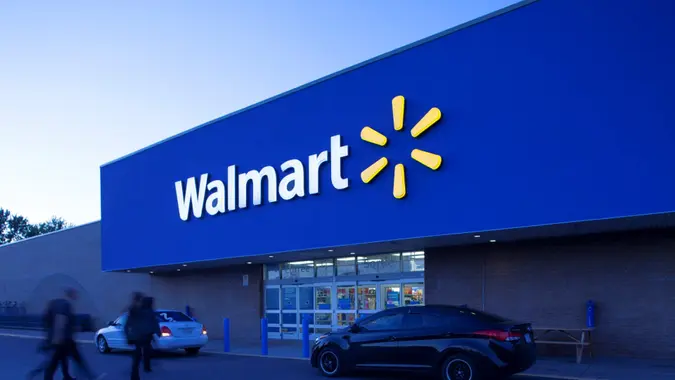
Walmart controls about 21% of the U.S. physical grocery market, according to Numerator data reported by Supermarket News. Amazon’s share of the U.S. grocery market hovers around 3%, according to market research firm Numerator, as reported by The Wall Street Journal. Walmart has continued to defend that advantage by rolling out thousands of price cuts in 2025, including roughly 2,000 permanent reductions, according to NPR. Amazon’s latest moves now put it in competition with Walmart’s scale-driven grocery model.
What This Means for Your Next Walmart Shopping Trip
Amazon’s big-box bet intensifies competition around grocery pricing well before any new stores open. That competition shows up in expanded rollbacks and promotional pricing starting now, not in 2027. About 93% of Amazon customers have also shopped at Walmart, according to a CIRP survey reported by Modern Retail.
So what does this mean for your next Walmart run? You don’t have to wait years to feel the effects. As Amazon shifts toward Walmart’s scale-driven model, Walmart has reason to keep its prices competitive.
Amazon vs. Walmart: Where Each One Is Still Cheaper
Amazon is often cheaper on packaged and shelf-stable items, while Walmart tends to have an edge on fresh groceries like produce, dairy and meat. Price competition between the two depends on what you’re buying, not loyalty to a single retailer. For many households, splitting purchases instead of relying on one store can help keep grocery spending in check over time. Checking prices on routine buys like coffee, paper goods, cleaning supplies and pantry staples can quickly show where convenience, not value, is driving decisions.
More From GOBankingRates