Do Checks Expire? How Long They’re Good For — and What to Do If One Expires
 Written by
Sarah Horvath
Written by
Sarah Horvath
 Edited by
Nupur Gambhir, CFHC™
Edited by
Nupur Gambhir, CFHC™

Commitment to Our Readers
GOBankingRates' editorial team is committed to bringing you unbiased reviews and information. We use data-driven methodologies to evaluate financial products and services - our reviews and ratings are not influenced by advertisers. You can read more about our editorial guidelines and our products and services review methodology.

20 Years
Helping You Live Richer

Reviewed
by Experts

Trusted by
Millions of Readers
Due to the popularity and ease of electronic payment and cash transfer apps, paper checks are slowly declining. They aren’t quite obsolete yet, so you may find a time when you’ll have to write, cash or deposit one. How long is a check good for, though? Keep reading to learn more.
When Does a Check Expire?
Although checks don’t have an official expiration date, personal checks expire after six months or 180 days. At this point, it’s up to the bank to decide whether it will honor or reject it.
Similarly, business checks expire within six months after the date written on the check. Certified checks, on the other hand, have no expiration date.
Be careful if you wait too long to use your check. The check writer may switch banks, thus changing their account or routing number as well. There’s also the chance the account no longer has enough funds to cover the check’s amount. Try to cash your check as soon as possible to avoid headaches later on.
How To Tell if a Check Is Expired: Step-by-Step
Here’s how to tell if your check is expired:
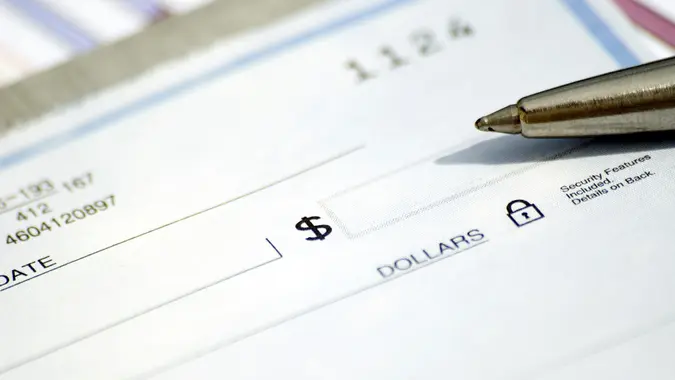
- Locate the date, which is in the upper right corner of a check.
- Count 180 days past that date.
- If today’s date is within 180 days of the check’s date, the check is eligible to be cashed or deposited at a bank or check-cashing location.
Legally, banks are obligated to cash or deposit checks within 180 days, but aren’t required to honor them past this date.
Why Do Checks Expire?
Checks expire to protect against fraud, accounting errors, and outdated financial agreements. Over time, the issuing account may close, the payee’s information may change, or the purpose of the check may no longer be valid. Banks typically won’t honor personal or business checks older than six months, helping ensure transactions are timely and accurate.
What to Do If Your Check Is Expired
If a check is expired — typically more than six months old — your bank may refuse to deposit or cash it. Here’s what you can do next:
- Contact the issuer: Reach out to the person or company who wrote the check and ask for a new one. Most banks recommend this as the safest option.
- Request a reissue: The check writer may need to stop payment on the original check and issue a new one. Be aware they might charge a stop payment fee, often around $30.
- Expect verification: If you try to deposit the expired check anyway, the bank might hold the funds while verifying with the issuer. This can delay access to the money or result in a returned check.
- Know your bank’s policy: Some banks may still honor stale-dated checks at their discretion, especially if the issuer’s account is still active and has sufficient funds.
To avoid complications, it’s best to deposit checks promptly — or request a reissue before they expire.
How to Prevent a Check from Expiring
Cashing or depositing a check might slip your mind, but waiting too long can cause complications. Here’s how to avoid missing the window:
- Deposit promptly: Aim to deposit or cash checks within 30 to 60 days of receiving them — even if the bank allows six months.
- Set reminders: Use a calendar app or phone reminder so you don’t lose track of paper checks.
- Request digital payment: Ask the payer if they can use direct deposit, PayPal, Zelle, or another electronic method next time — it’s faster and doesn’t expire.
- Be proactive if you’re the issuer: If you’re writing a check, consider adding a note like “Void after 90 days” for clarity, even though banks aren’t legally required to honor that.
Taking simple steps early can save you from reissue hassles and delays later.
What Happens If You Cash an Expired Check and It Bounces?
Trying to deposit an expired check can come with consequences — especially if the bank processes it but the funds aren’t available.
- Returned check fees: If the check is returned, your bank may charge you a fee, typically ranging from $25 to $35.
- The issuer may also be charged: The person or business that wrote the check could incur a non-sufficient funds (NSF) fee or stop payment charge.
- Legal and relationship issues: In some cases, especially with business transactions, trying to cash an old check could result in disputes or strained relationships.
- Delays in getting paid: Even if the bank allows the deposit, they may place a hold while verifying with the issuer, delaying your access to funds.
When in doubt, it’s always better to ask for a new check than risk fees or frustration with a stale one.
Can You Reissue an Expired Check?
You can ask the person issuing the check to write a new check and cancel the old one if it hasn’t been deposited yet. Things can get complicated, though, if the check has expired but was still deposited and it ended up bouncing. The check’s issuer might need to pay bounced check fees to their bank–an extra expense that can be frustrating.
Stop Payment
The issuer can also request a stop payment. A stop payment occurs when the check issuer asks their bank to stop processing a check if it has not yet been deposited or cashed. The bank may assess a fee for a stop payment.
How Long Are Bank Checks and Certified Checks Good For?
No bank in the United States is obligated to cash checks over 180 days old. However, this does not necessarily mean that all is lost if an expired check resurfaces.
It is up to the bank’s discretion to cash or deposit an old check. For example, if you are the issuer and have a solid relationship with the bank. The bank knows that you can support the check balance, so the bank may choose to deposit or cash the check anyway. These decisions are determined on a case-by-case basis.
Certified checks don’t expire because they are guaranteed funds. The bank has already done the work of verifying that the money is in the account and is available to be used.
How To Avoid Issues With Expired Checks
The minute you receive a check, it’s a good idea to cash or deposit it immediately. That way, you can avoid having to worry about an expired check or asking the check’s issuer to write a new check. Once you’ve cashed or deposited the check, it’s out of sight and out of mind.
If you don’t have the opportunity to take care of the check right away, though, set a reminder next time you’ll be able to complete the transaction. You can add it to your agenda during one of your errands to visit the bank. Or set up a notification on your phone if you’d prefer to deposit the check on your bank’s mobile app. Either way, giving yourself a chance to plan now can help avoid troubles later.
Final Thoughts: What To Do If Your Check Is Close to Expiring
Checks do expire, typically after 180 days, so it’s important not to let them sit untouched. Whether it’s a personal check, business check, or government-issued payment, your best move is to deposit or cash it as soon as possible.
Waiting too long can lead to complications, like a denied deposit, bounced payment, or having to track down the issuer for a replacement. To avoid the hassle, make it a habit to handle checks promptly–and if one slips through the cracks, don’t hesitate to reach out for a reissue. Acting quickly helps ensure you don’t lose access to money that’s rightfully yours.
FAQs on Expired Checks
Here are some frequently asked questions about expired checks.- Do checks expire if not cashed?
- Yes, checks will expire if they are not cashed. You have 180 days, or six months, from the date written on the check to deposit or cash it. After that period, it is up to the bank to decide whether it will honor or reject it.
- How long is a certified check good for?
- Certified checks typically don't expire since UCC guidelines about timing generally don't apply to them. However, U.S. Treasury checks are typically good for one year after the issue date.
- Can you still use old checks?
- You can write a check to someone if your checks are old as long as the account is still open and active, and the account number and routing number are visible and haven't changed. However, if you received a check, you should cash or deposit it within 180 days or six months from the date written on the check. The check is considered expired beyond that time.
Melanie Grafil, Jared Nigro and Caitlyn Moorhead contributed to the reporting for this article.
The article above was refined via automated technology and then fine-tuned and verified for accuracy by a member of our editorial team.
Our in-house research team and on-site financial experts work together to create content that’s accurate, impartial, and up to date. We fact-check every single statistic, quote and fact using trusted primary resources to make sure the information we provide is correct. You can learn more about GOBankingRates’ processes and standards in our editorial policy.
- Federal Reserve Bank of Atlanta. "U.S. Consumers’ Use of Personal Checks: Evidence from a Diary Survey."
- Legal Information Institute. "BANK NOT OBLIGED TO PAY CHECK MORE THAN SIX."
- First State Community Bank. 2022. "Does a Personal Check Expire?"
- Huntington Bank. "How long is a check good for: Do checks expire?"
- HelpWithMyBank.gov. "A check I deposited bounced. Am I liable for the entire amount?"